
College of Engineering

The Richter Lab is broadly focused on studying multiphase, turbulent processes in the environment -- particularly those that are difficult to observe and understand, yet have widespread impact on society and human flourishing. This includes complex problems spanning from the air-sea interface inside hurricanes, to cloud microphysics, to contaminant transport in porous media. Our group sits at the intersection of fundamental fluid mechanics, boundary layer meteorology, cloud microphysics, atmospheric science, and turbulence.
We employ a wide variety of techniques and tools, with a strong emphasis on advanced numerical methods. Turbulence-resolving, high-performance computing (HPC) methods such as direct numerical simulation (DNS) and large-eddy simulation (LES) play a major role in uncovering the basic physics governing complex systems. At the same time, we develop advanced theoretical and data-driven models, using a combination of physics and machine learning/artificial intellegince (AI/ML). We aim at low-cost, high-accuracy representations of complex environmental processes for use in predictive models, such as hurricane forecasts, which benefit society.
The lab is always on the lookout for interested collaborators, students, and postdocs, so please reach out to Prof. Richter if you have any questions or want to get involved.
ResearchGate Profile Google Scholar Profile
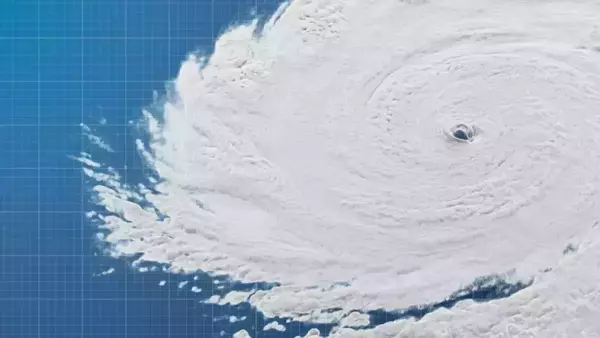
The Richter Lab's research is improving hurricane forecast accuracy, giving officials time to evacuate and protect residents.
Watch the Video Read the Story

